
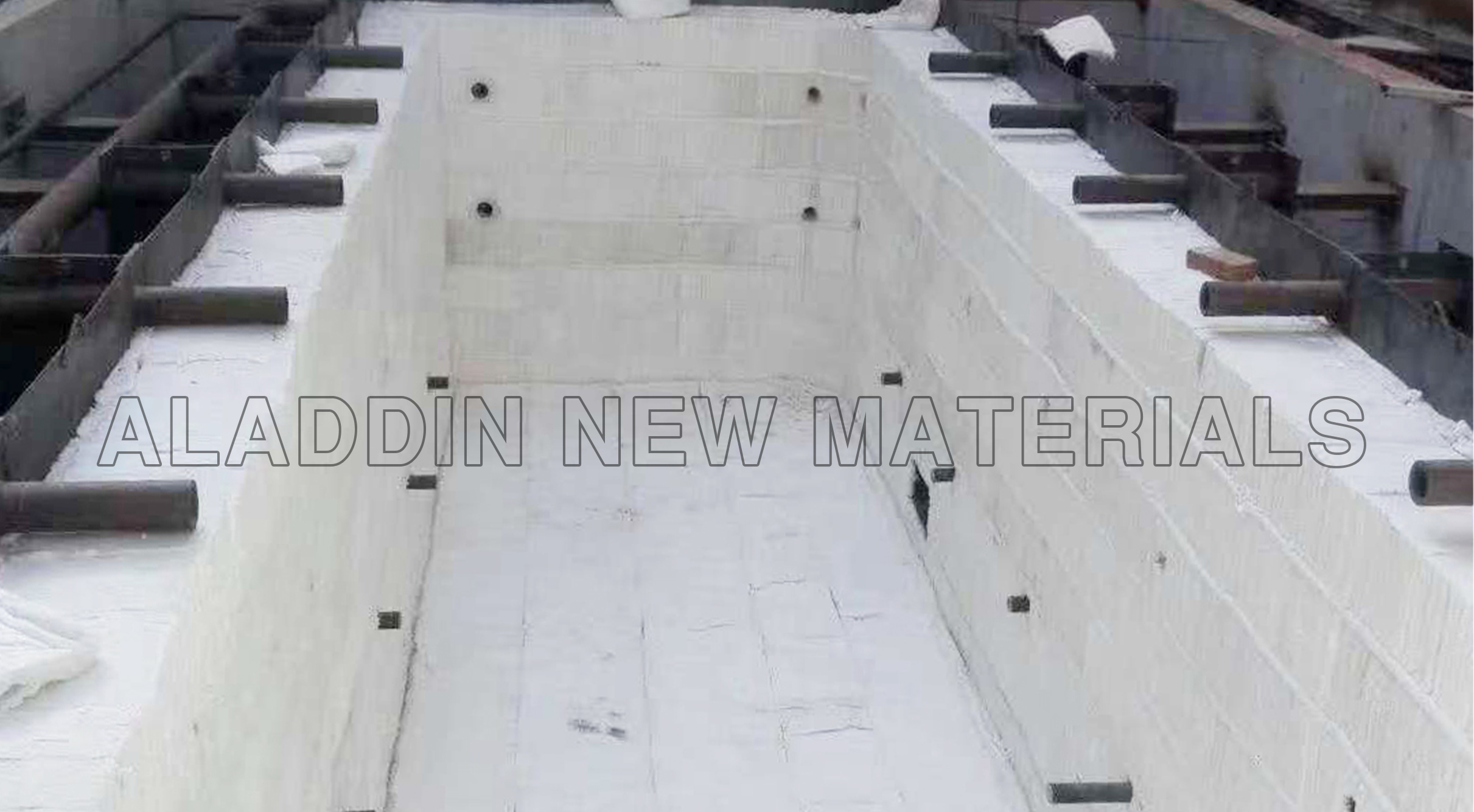
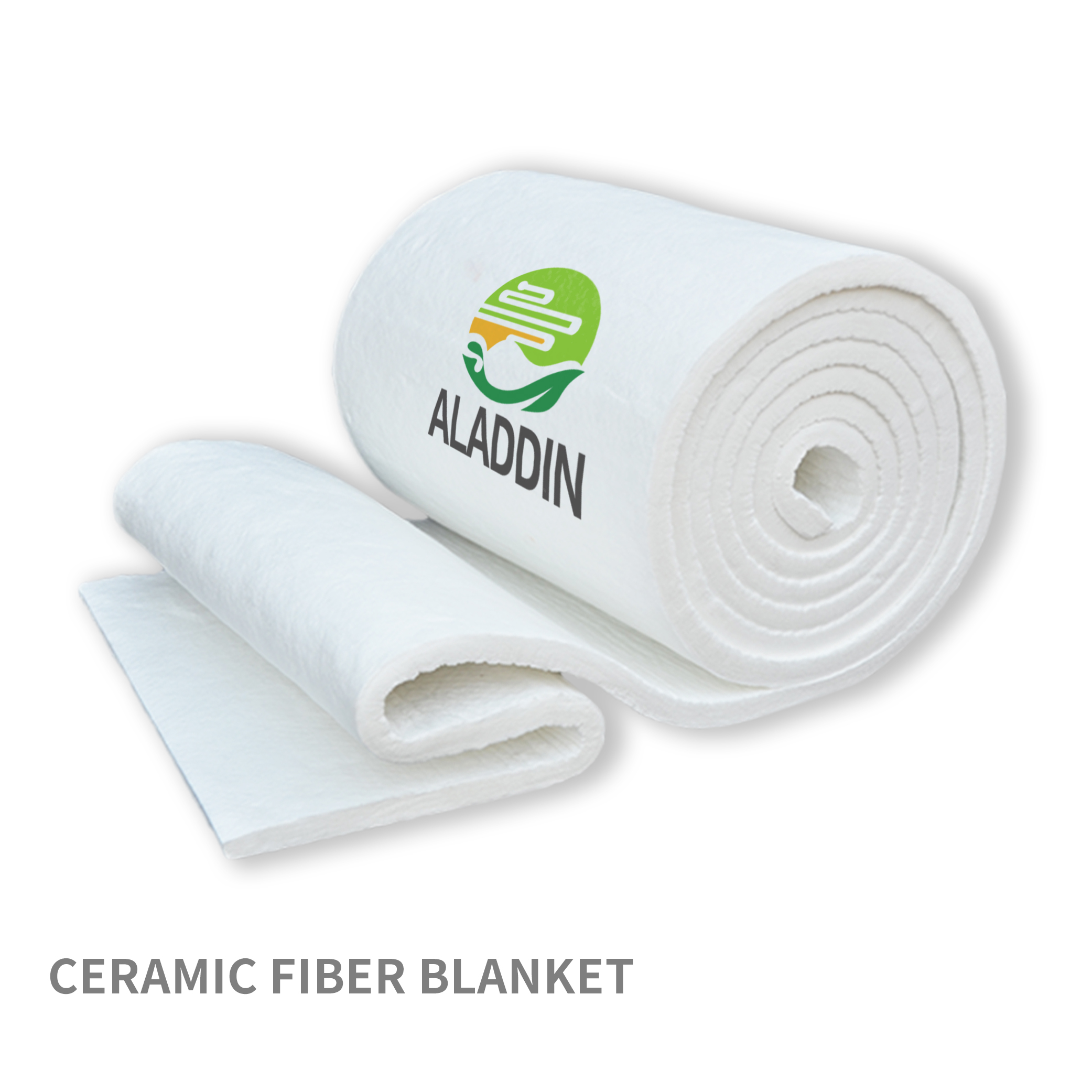
The emergence of this new type of thermal insulation material has greatly reduced heat loss troubles in domestic galvanizing furnaces. The core material is ceramic fiber blanket, which is assembled with bolts, nuts, flat-laid blankets, modules and compensation blankets to realize high-efficiency thermal insulation. Since then, ceramic fiber modules have become the mainstream insulation choice for hot-dip galvanizing furnaces.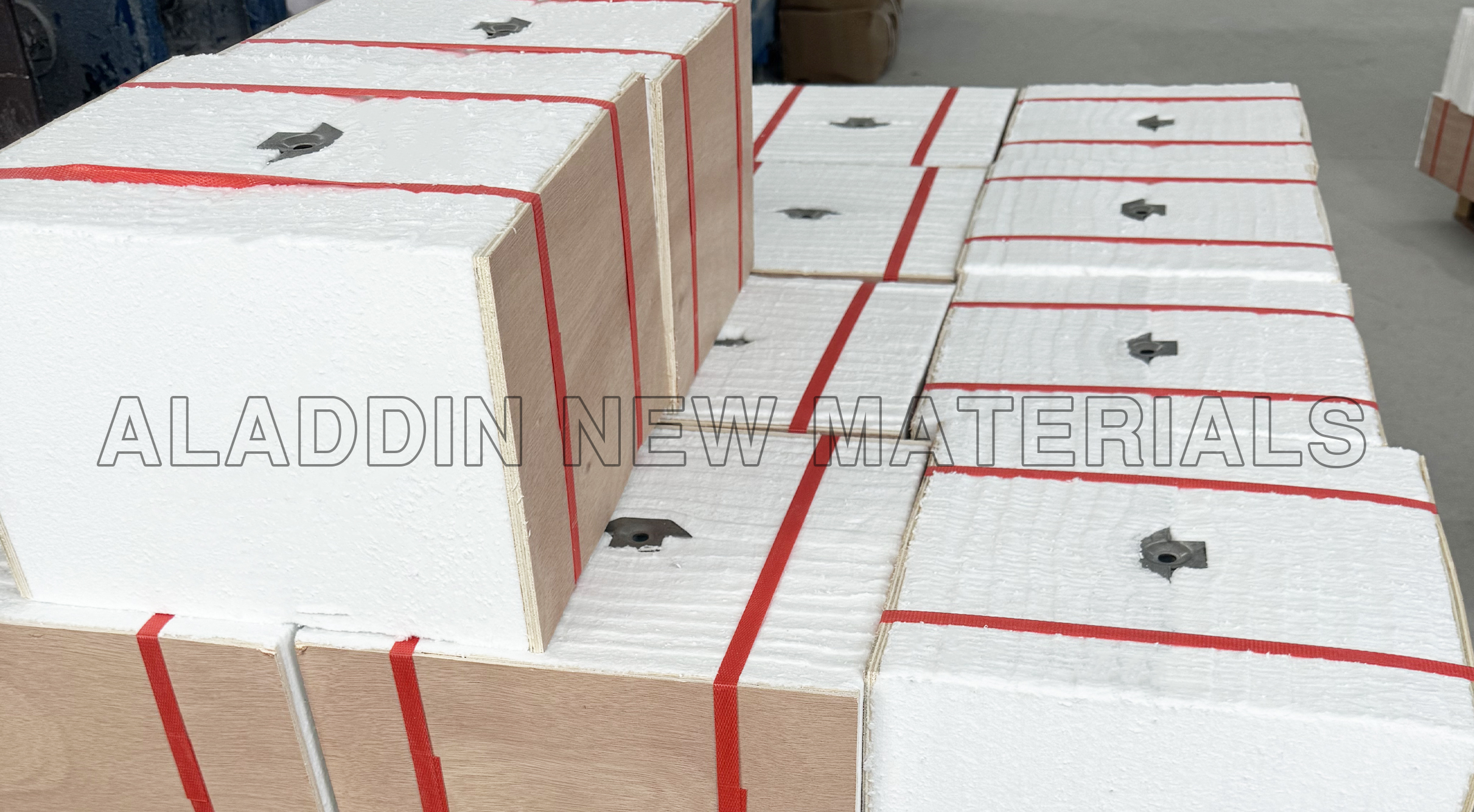
Flat-laid blanket: 30 mm total thickness (2 layers of 20 mm blankets installed in compressed state)
Hot-face ceramic fiber module: 300 mm thickness
Overall lining total thickness: 330 mm
The adopted ceramic fiber modules have a classified temperature rating of 1260℃.
It avoids hollow core defects caused by uneven expansion at the edges and corners of modules in the staggered parquet layout, ensuring optimal thermal insulation performance. During back lining installation on the furnace roof, quick fasteners combined with module bolts are used for temporary fixation.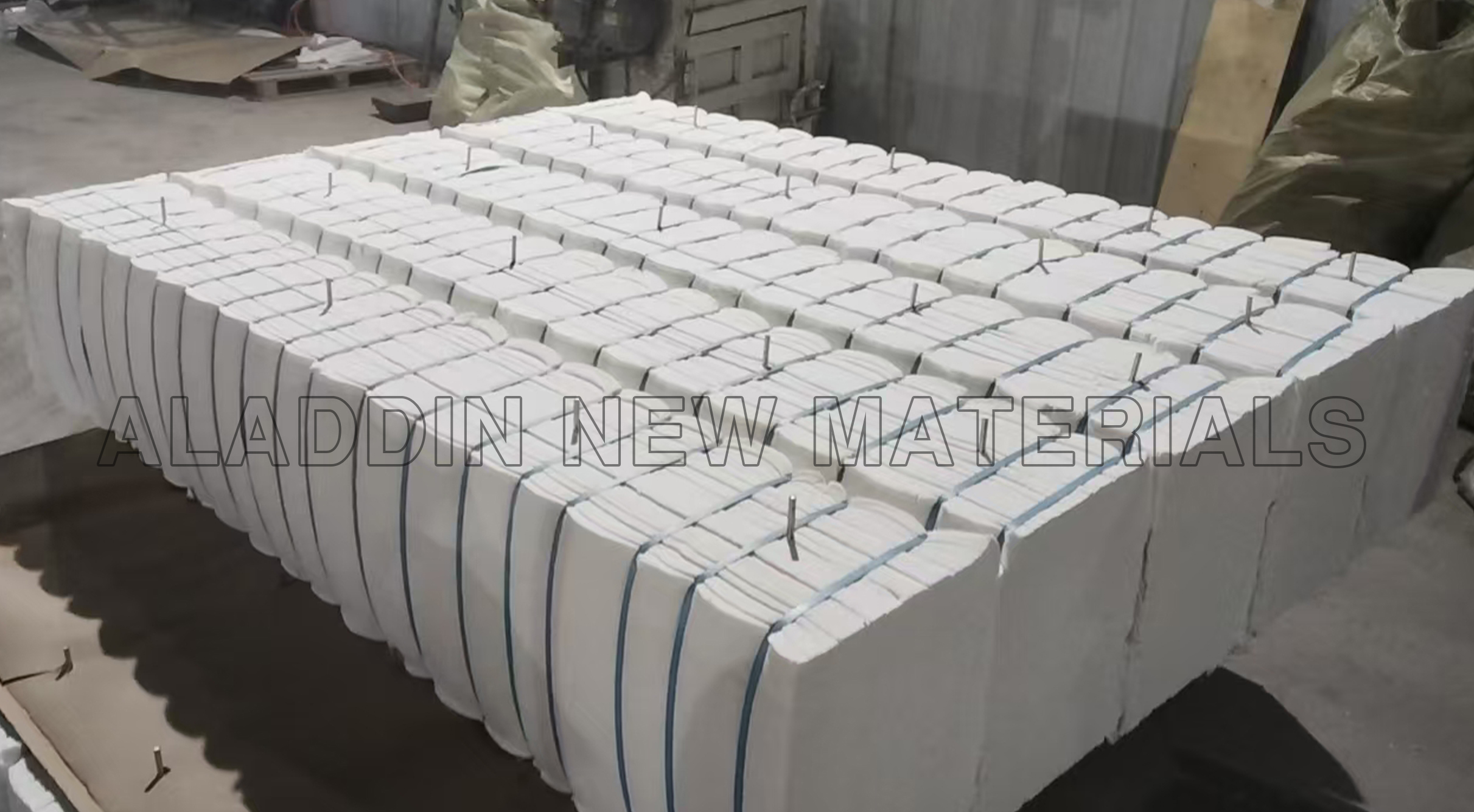
Diversified anchor pieces installed on the cold side of modules support both inline linear arrangement and staggered parquet layout during installation.
After binding straps are removed, folded blankets expand and compress against one another in all directions without forming gaps.
Flexible fiber structure resists external mechanical loads.
The elasticity of fiber blankets accommodates furnace shell deformation and prevents gap generation between module assemblies.
Low bulk density leads to low heat absorption of the lining structure.
Low thermal conductivity delivers remarkable energy conservation benefits.
Excellent thermal shock resistance for frequent temperature fluctuation working conditions.
No oven drying or curing period required for the lining; the furnace can be put into immediate operation upon installation completion.
Anchoring hardware is set back from the hot face of modules, so the metal fasteners operate at a much lower temperature, greatly improving long-term anchoring safety.
LiveChatX
 Send Email
 WhatsApp