Zirconia-Containing Ceramic Fiber vs. Zirconia Fiber: One Word Makes a World of Difference
Both zirconia-containing ceramic fiber and zirconia fiber feature the character "zirconia" in their names, yet they have fundamental differences in composition, microstructure, performance and application scenarios. Accurate identification of the two materials is critical for material selection and cost control of high-temperature equipment.
01 Composition and Content
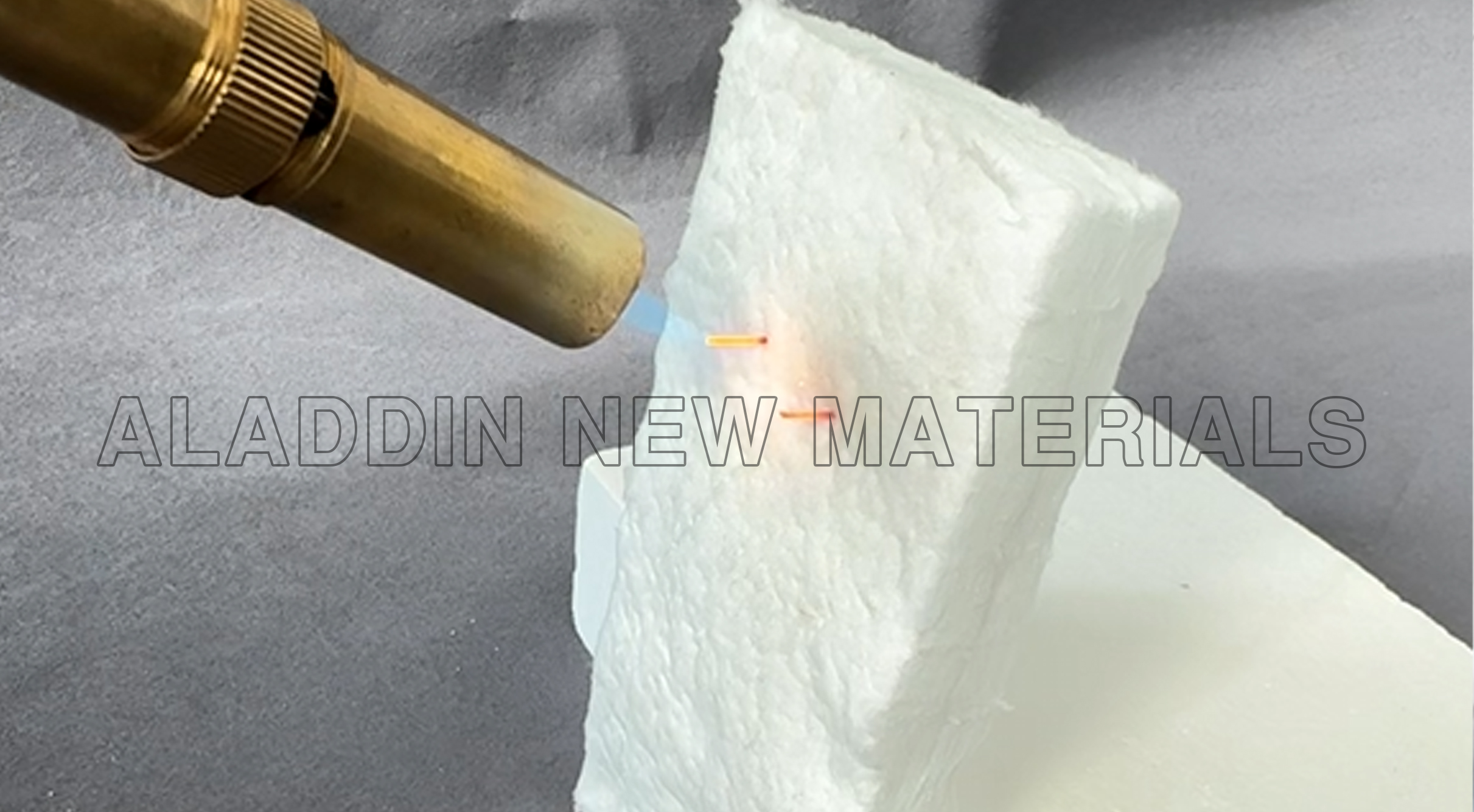
Zirconia-containing ceramic fiber belongs to the zirconia-alumina silicate system. Its basic components are Al₂O₃ (40%~45%) and SiO₂ (45%~50%), while ZrO₂ serves as a modification additive with a content of 15%~17%.
Zirconia fiber takes zirconia as the base material. The total content of ZrO₂ and HfO₂ is generally no less than 90%, and over 99% for high-purity grades. Since hafnium naturally coexists with zirconium ore at 1%~3% and cannot be completely separated via industrial processes, the total content is usually expressed as ZrO₂+HfO₂.
02 Microstructure
Zirconia-containing ceramic fiber is manufactured by melt blowing or centrifugal spinning. The molten liquid is rapidly cooled to form an amorphous glassy structure with good flexibility at room temperature. However, it tends to crystallize, shrink and pulverize under ultra-high temperature conditions.
Zirconia fiber is produced via the sol-gel method or precursor conversion method, followed by high-temperature sintering to form a polycrystalline structure stacked with nano-sized crystal grains. It boasts stable structure and ultra-high temperature resistance limit.
03 Temperature Resistance: A Temperature Gap of Around 800°C
Zirconia-containing ceramic fiber: Classified temperature of 1430°C, continuous service temperature ≤1350°C. When the temperature exceeds 1500°C, the SiO₂ component becomes unstable, leading to fiber crystallization and shrinkage, as well as deteriorated thermal insulation performance.
Zirconia fiber: Continuous service temperature ranges from 1700°C to 2200°C, and special customized products can withstand up to 2500°C. Zirconia features one of the lowest high-temperature vapor pressures among metal oxides, delivering zero volatilization and no contamination under high-temperature service.
04 High-Temperature Electrical Conductivity
Zirconia-containing fiber is non-conductive at both room temperature and high temperature, acting as an excellent electrical insulation material.Zirconia fiber exhibits high-temperature oxygen ionic conductivity above 800°C (oxygen ion conduction through oxygen vacancies), which enables its application in electrochemical equipment such as solid oxide fuel cells. Electrical isolation is required when it is used for conventional thermal insulation. 05 Price & Cost: A Cost Gap of Dozens of Times
Zirconia-containing fiber is made from abundant natural minerals such as kaolin and coal gangue with mature production techniques, classified as general industrial-grade refractory materials.Zirconia fiber suffers from extremely high raw material costs (dozens of times higher than zirconia-containing fiber). Its production involves sophisticated procedures including sol preparation, spinning and high-temperature crystallization with a low finished product yield. The terminal selling price is dozens of times that of zirconia-containing fiber, and certain high-end variants are priced by weight per gram. 06 Application Scenarios
Applicable Fields for Zirconia-Containing Ceramic Fiber
Steel rolling reheating furnaces and ladle covers in ferrous metallurgy
Cracking furnaces and reforming furnaces in petrochemical industry
Kiln linings for ceramic and glass manufacturing
Various industrial heat treatment furnaces and annealing furnaces
The operating temperature of the above working conditions is generally below 1300°C, making zirconia-containing ceramic fiber the mainstream option thanks to outstanding cost performance.
Applicable Fields for Zirconia Fiber
Thermal protection systems for aerospace vehicles and thermal insulation layers for rocket engines
Ultra-high temperature refractory linings for military equipment
Single crystal growth furnaces and ultra-high temperature laboratory electric furnaces
High-temperature electrochemical devices including solid oxide fuel cells
These application scenarios impose stringent requirements on temperature resistance limit, material purity and high-temperature chemical stability, where zirconia fiber is often the only feasible material choice.
ALADDIN New Materials
With over 40 years of development, Tangshan Aladdin High Temperature Materials Co., Ltd. is a professional ceramic fiber manufacturer integrating production, R&D and engineering development.We operate four major production bases in Hebei, Shandong, Shanxi and Jiangsu, equipped with more than 30 production lines and an annual output exceeding 200,000 tons. All ceramic fiber products from Aladdin are accompanied by formal test reports complying with national standards.If you are interested in our products, please contact us via private message or send the keyword "PURCHASE" to obtain our contact information.

 Send Email
 WhatsApp