
In the field of volatile organic compound (VOCs) waste‑gas treatment, the Regenerative Thermal Oxidizer (RTO) is one of the most widely‑applied core pieces of equipment. It oxidizes and decomposes organic waste gas into CO₂ and H₂O at temperatures above 760 °C, while recovering heat to achieve energy‑saving performance.
Nevertheless, frequent heating‑cooling cycles caused by periodic valve switching, high internal furnace temperature and external heat dissipation impose extremely stringent requirements on furnace lining insulation materials. Poor insulation will not only lead to sharp increases in energy consumption and hot outer furnace surfaces, but may also cause cracking and spalling of the furnace lining due to thermal stress, endangering equipment service life and operational safety.
RTO furnaces operate under two distinct working conditions:
High operating temperature: The oxidation chamber runs at 760‑820 °C, with transient local temperatures exceeding 1000 °C. Insulation deficiency triggers massive heat loss, higher auxiliary fuel consumption and directly raises operating costs.
Frequent thermal cycling: Periodic airflow reversal via switch valves subjects regenerators to repeated heat‑storage and heat‑release cycles. Lining materials must withstand drastic temperature swings and thermal shock.
Traditional heavy‑duty refractory bricks feature high heat capacity, slow heat‑up rates and poor thermal‑shock resistance, making them unsuitable for such service conditions. Light‑weight composite structures centered on ceramic fiber modules have become the mainstream insulation choice for RTO furnaces.
Thanks to low weight, low thermal conductivity and excellent thermal‑shock resistance, ceramic fiber materials are widely adopted for RTO furnace insulation. Aladdin’s application solution for this sector can be summarized as “three‑layer structure with three product types”.
Take a standard RTO project for reference: furnace dimensions: 6.42 m (L) × 1.74 m (W) × 4.325 m (H). Maximum temperature in the upper combustion chamber reaches 850 °C, while the lower regenerator peaks at approx. 750 °C. The insulation target is to keep the outer‑shell temperature ≤ 60 °C for superior energy efficiency and extended service life.
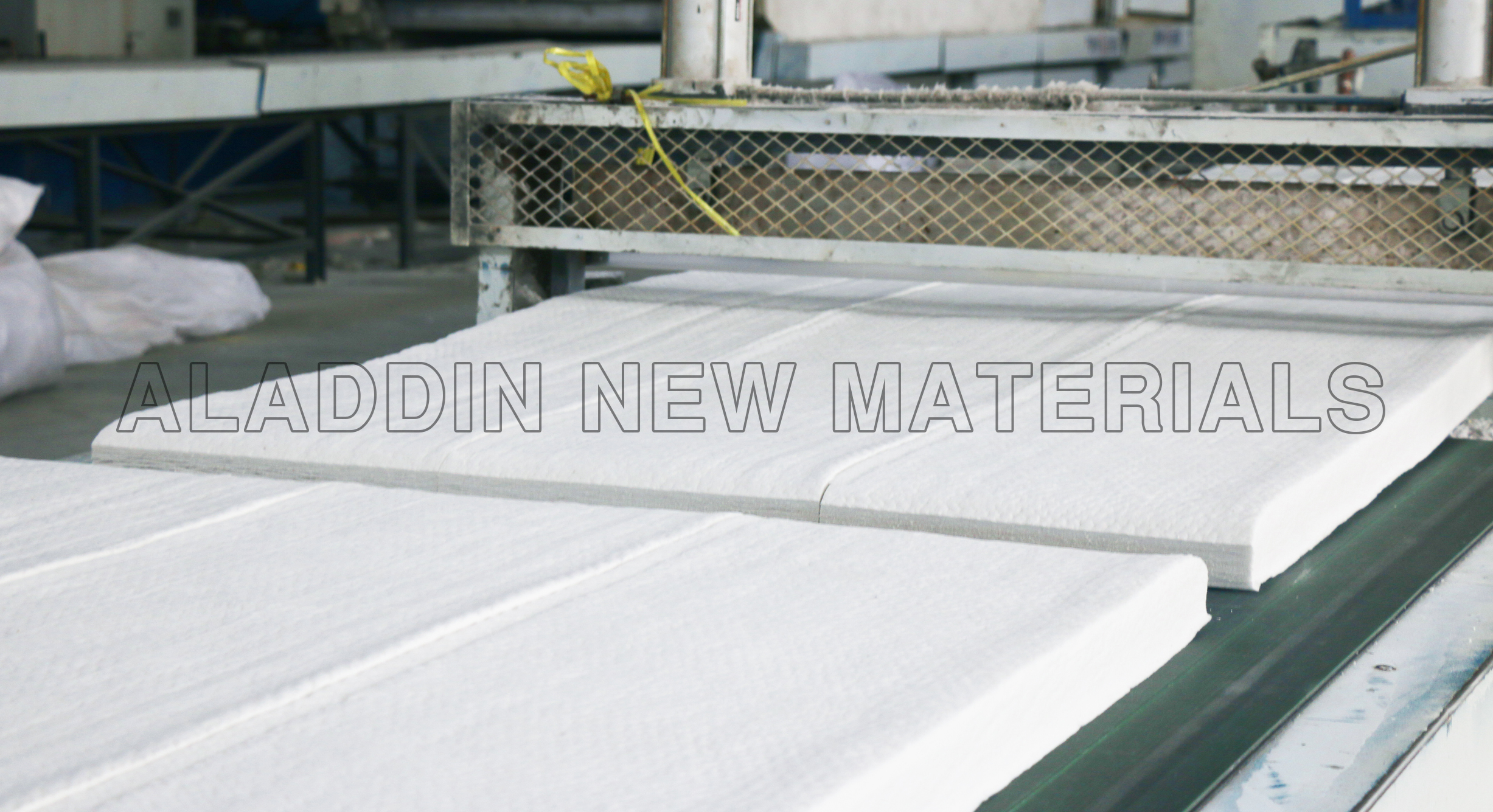
The combustion chamber adopts a composite system of ceramic fiber modules plus backing blankets, with an overall thickness of 250 mm.
Primary insulation layer: 200 mm Aladdin standard‑grade ceramic fiber modules
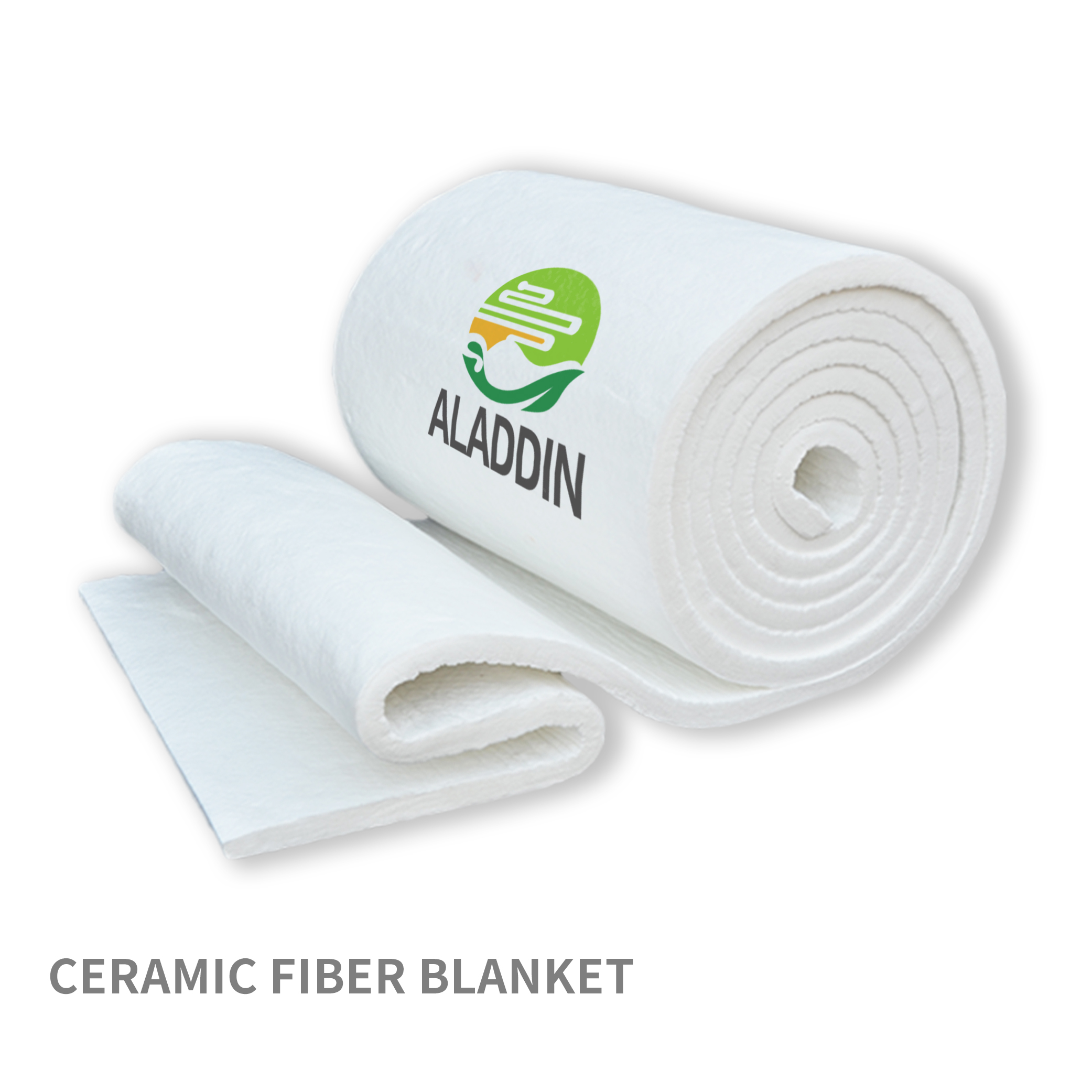
Back‑up layer: 50 mm standard‑grade ceramic fiber blanket, installed as two compressed 30 mm layers.
After installation, modules expand and compact against one another to form a continuous gap‑free insulation lining. 304 stainless steel metal anchors are used to guarantee reliable high‑temperature fastening.
The regenerator also uses a composite structure with a total thickness of 200 mm:
Primary insulation layer: 150 mm Aladdin standard‑grade ceramic fiber modules
Back‑up layer: 50 mm standard‑grade ceramic fiber blanket, laid as two compressed 30 mm layers.
Metal anchors are made of 304 stainless steel.
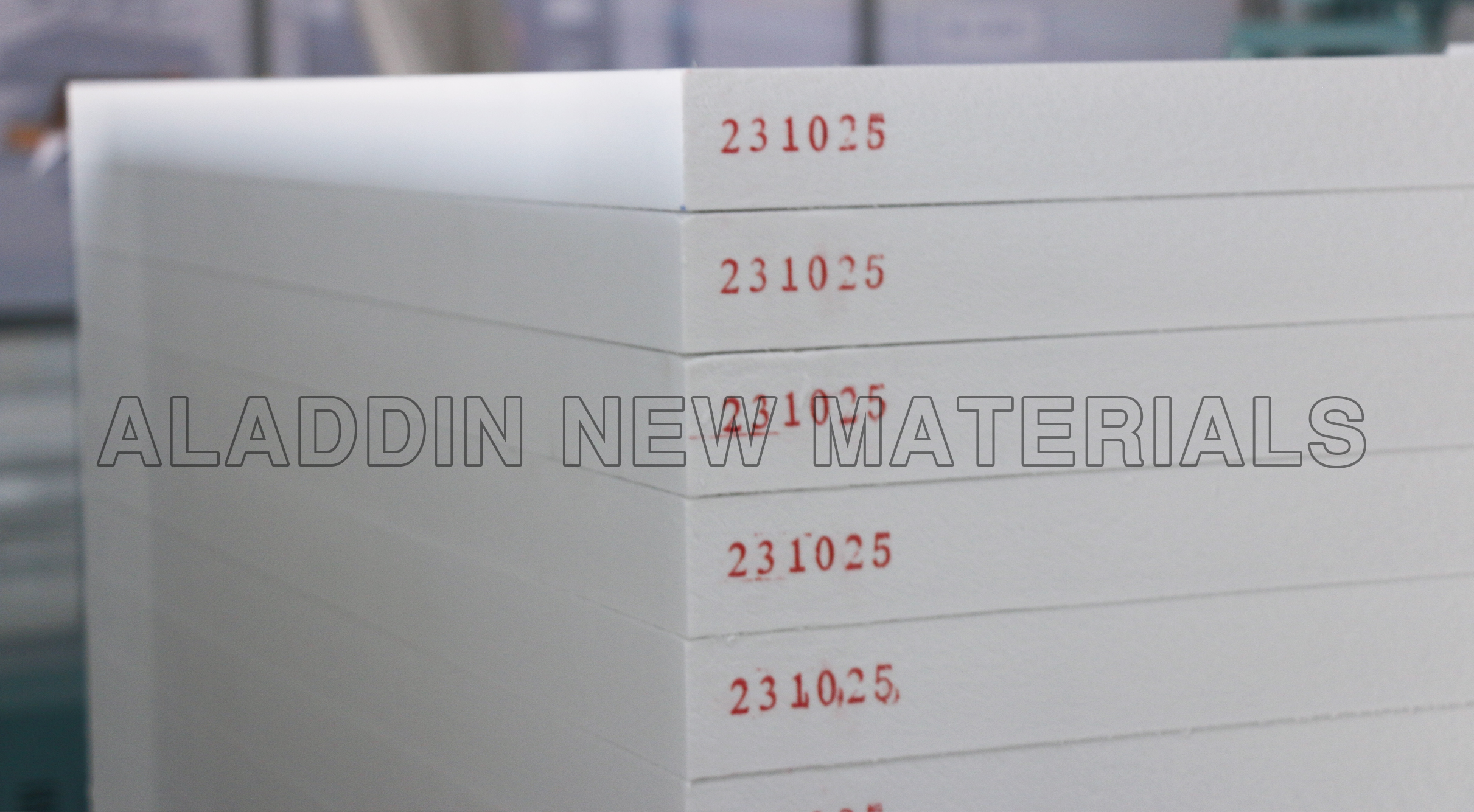
Constrained space and moderately lower operating temperatures in lower duct sections call for a combined ceramic fiber board and blanket solution at total thickness of 100 mm: ‑ 50 mm Aladdin standard‑grade ceramic fiber board + 50 mm standard‑grade ceramic fiber blanket. Ceramic fiber boards deliver high density and mechanical strength, ideal for duct sections requiring structural rigidity. Anchors are 304 stainless steel.
Compared with traditional refractory brick linings, ceramic fiber systems deliver prominent benefits for RTO furnaces:
Remarkable energy saving: Heat storage of lightweight fiber linings is roughly 1/10 that of heavy bricks, delivering approximately 60 % energy savings and drastically cutting auxiliary fuel consumption.
Excellent thermal‑shock resistance: Flexible fibrous material tolerates cyclic heating‑cooling stress from periodic switching and resists cracking and spalling.
Fast‑track construction: Modular installation; no pre‑heating bake‑out is required before commissioning, shortening project lead‑time.
Weight reduction & cost optimization: Fiber material weighs only 1/30‑1/10 of conventional refractory bricks, lowering furnace load and steel‑structure costs.
Convenient maintenance: Damaged sections can be replaced locally without full lining removal.
As core VOCs‑treatment equipment, RTO furnace insulation quality directly determines energy‑consumption levels, operational safety and equipment service life. For this critical application, Aladdin’s combined solution of ceramic fiber modules, blankets and boards provides long‑term reliable insulation performance with its balanced strengths: light weight, high efficiency, superior thermal‑shock resistance, easy installation and simple maintenance.
Drawing on over 40 years of technical expertise in ceramic‑fiber materials, Aladdin performs precise material selection and custom‑engineered solutions for different temperature zones of RTO furnaces, including combustion chambers, regenerators and ductwork, to support efficient and stable operation of environmental‑protection equipment.
For further product and service information, please contact Shanxi Aladdin New Materials Co., Ltd.: Tel: 400‑085‑8836 E‑mail: aladdin@aldfiber.com We are ready to provide you with full support.
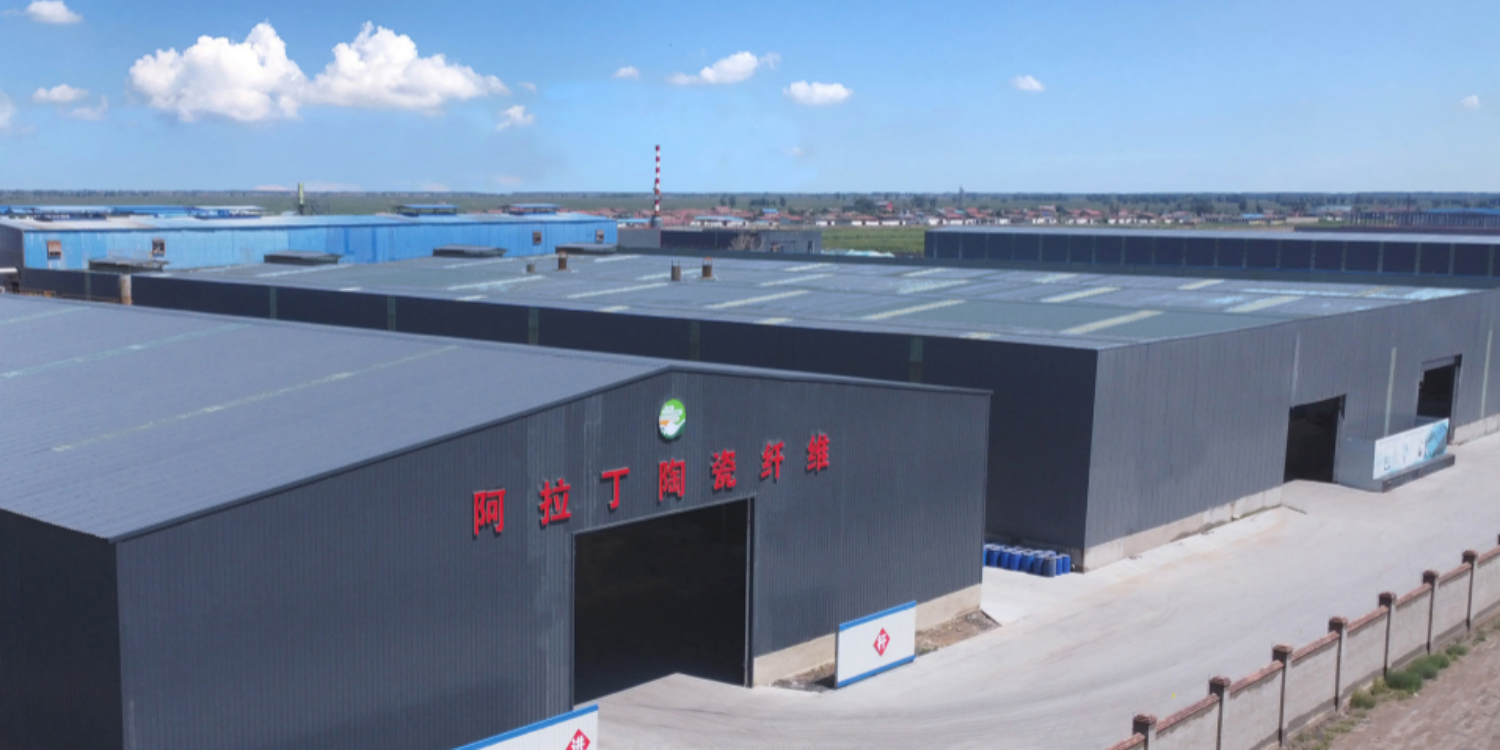
With more than 40 years of development, Aladdin High‑Temperature Materials Co., Ltd. is a professional ceramic‑fiber manufacturer integrating production, R&D and engineering development. We operate four major production bases across China located in Hebei, Shandong, Shanxi and Jiangsu, with over 30 production lines and an annual output exceeding 200 000 tons.
All Aladdin ceramic‑fiber products come with corresponding test reports complying with Chinese national standards. Should you be interested in our products, you may send us a private message or type “Purchase” to obtain our contact details.
LiveChatX
 Send Email
 WhatsApp