
Bulk density of ceramic fiber refers to the ratio of the weight of ceramic fiber products to their total volume. It is a key indicator for the rational selection of furnace linings and also a major factor affecting thermal conductivity.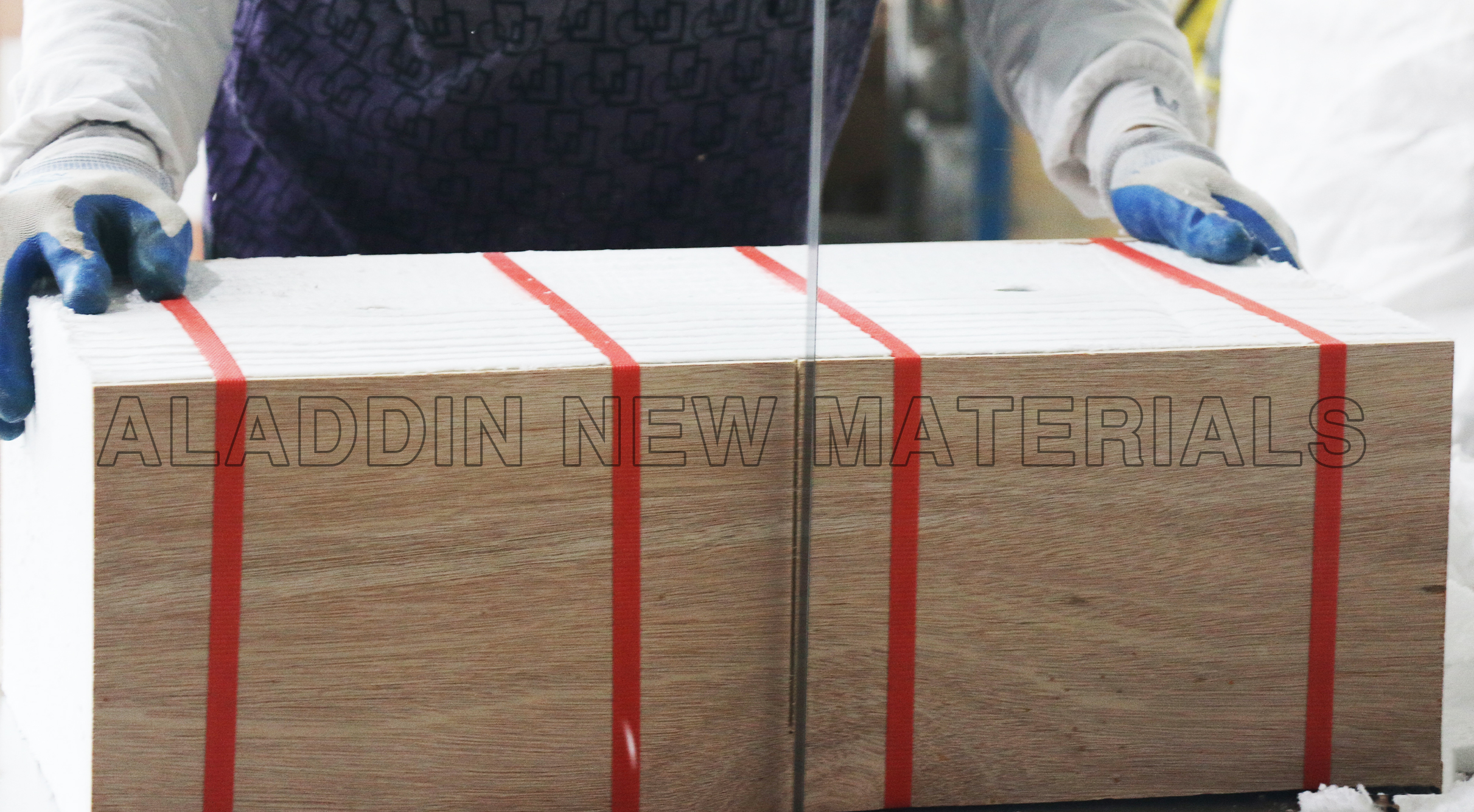
A
The thermal conductivity of ceramic fiber products decreases as bulk density rises, yet the decreasing rate gradually slows down. Once the bulk density exceeds a certain threshold, thermal conductivity stops falling and tends to increase instead.
B
At different temperatures, there exists a minimum thermal conductivity along with its corresponding minimum bulk density. The bulk density for the minimum thermal conductivity rises as temperature increases.
A correct understanding and application of the above rules is vital for the use of ceramic fibers. The thermal insulation performance of ceramic fibers mainly relies on the heat insulation effect of sealed air inside the pores of products. Given a fixed specific gravity of solid fibers, a higher porosity means a lower bulk density.
With a fixed shot content, the effect of bulk density on thermal conductivity essentially reflects the influences of porosity, pore size and pore characteristics on thermal conductivity.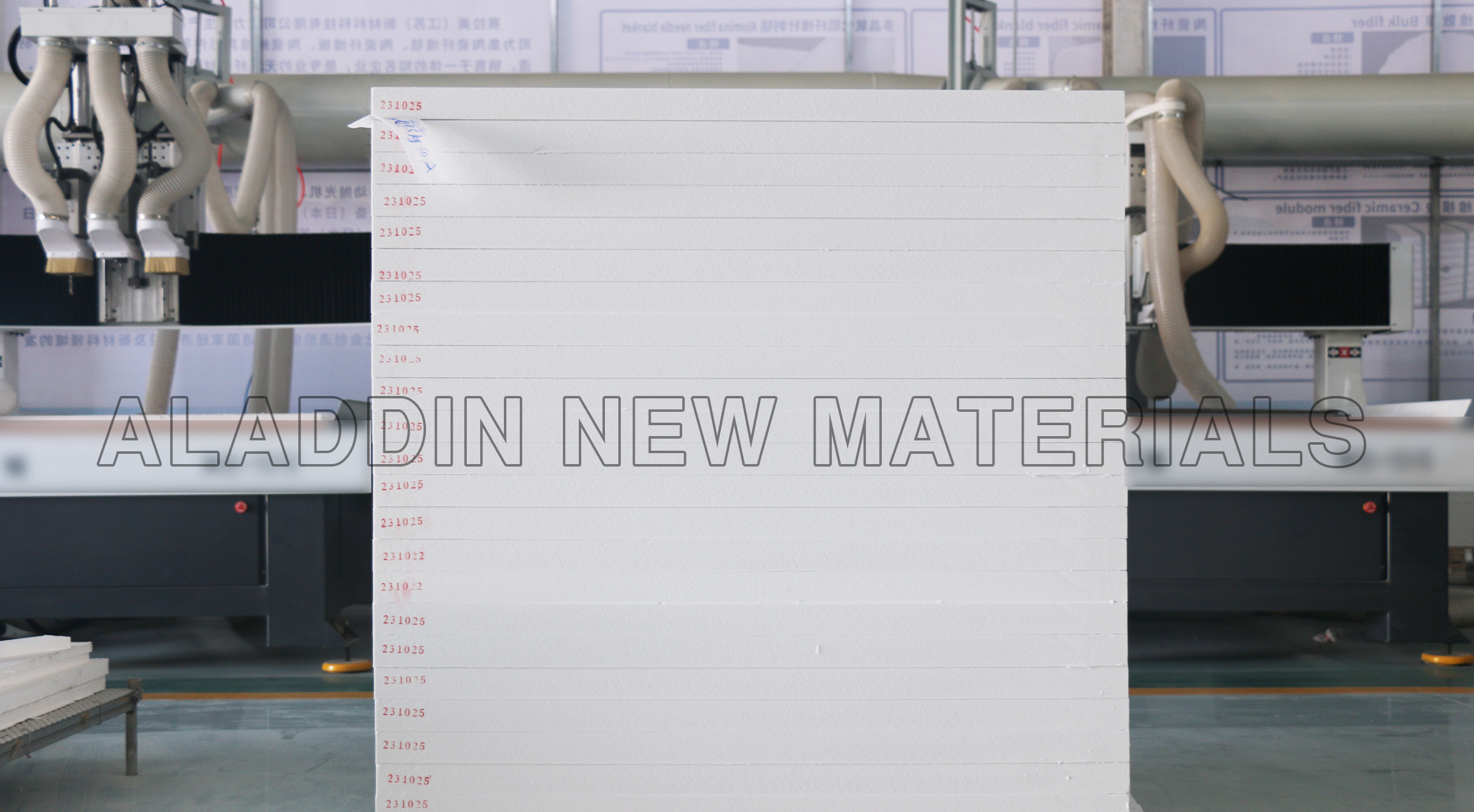
Bulk density < 96 kg/m³
Enhanced gas convection and radiant heat transfer within the composite structure cause thermal conductivity to rise exponentially as bulk density decreases.
Bulk density > 96 kg/m³
As bulk density increases, more closed micropores form inside the fibers. Air flow in the pores is restricted, reducing heat transfer inside the fibers and increasing thermal resistance. Meanwhile, radiant heat transfer through pore walls is also cut down, leading to a drop in thermal conductivity.
Bulk density within 240 ~ 320 kg/m³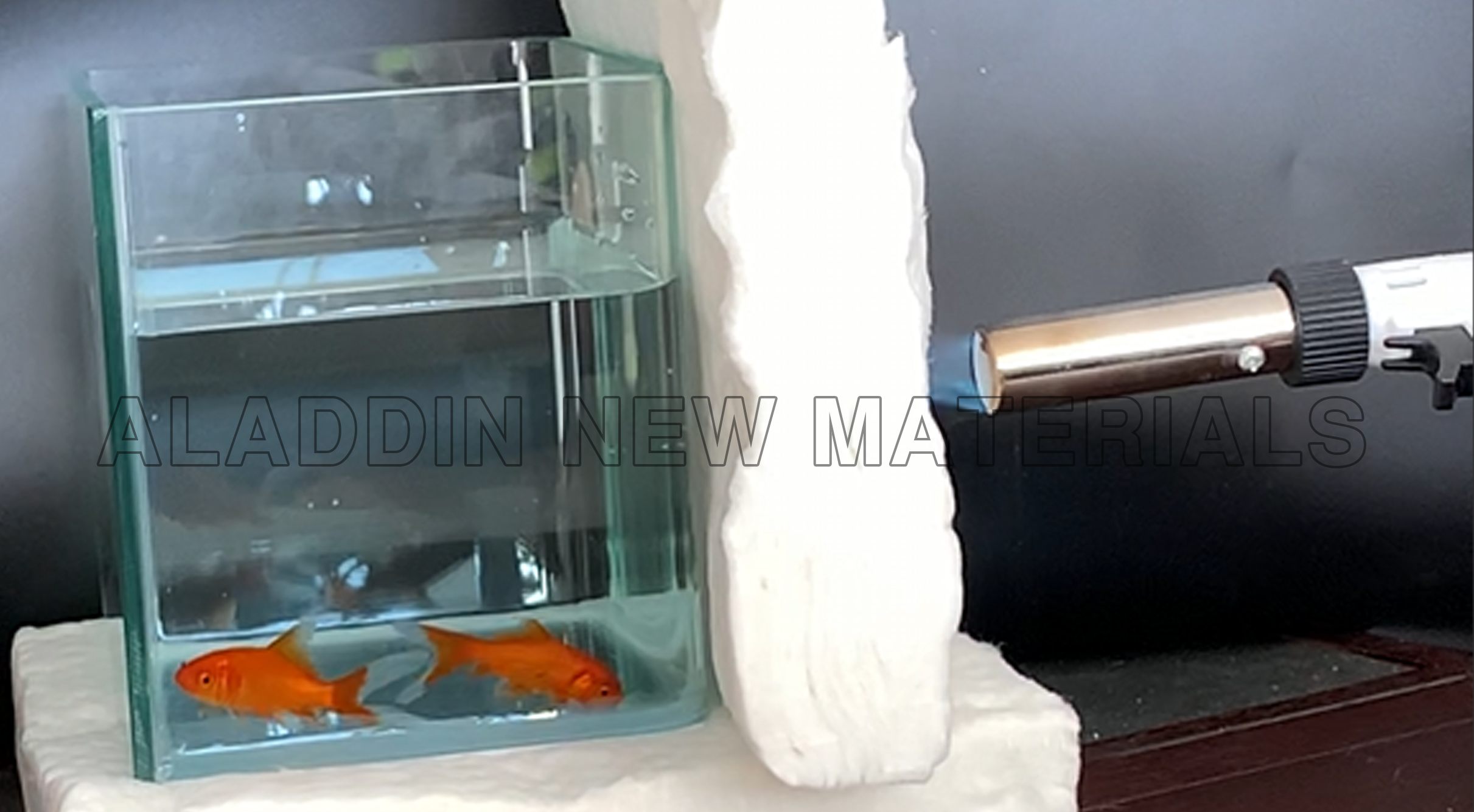
When bulk density rises to this range, the contact points between solid fibers increase, forming thermal conduction paths that boost heat transfer. Additionally, more fiber contact points weaken the thermal damping effect of pores. Consequently, thermal conductivity no longer decreases and begins to climb.
Accordingly, porous fiber materials have an optimal bulk density for the minimum thermal conductivity. For overseas layered ceramic fiber furnace linings, the specified bulk density of ceramic fibers on the hot face is 130 ~ 160 kg/m³. For flat-laid composite furnace linings, the hot face bulk density is set at 200 ~ 240 kg/m³.
The bulk density of fiber products gradually decreases from the hot face to the inner layers of the furnace wall. At high temperatures, the reduction of thermal conductivity with rising bulk density is more obvious than at low temperatures. A furnace lining with graded bulk density across the thickness can maintain uniform thermal resistance. Under the same thermal resistance requirement, this structure reduces fiber consumption and lowers furnace lining costs.
LiveChatX
 Send Email
 WhatsApp