
The brick kiln firebreak board is an innovative product that can replace traditional refractory brick hanging structures in brick kilns. It improves the adjustability of tunnel kilns and reduces temperature differences within the kiln. In fact, this firebreak board is a rigid refractory material based on ceramic fibers, belonging to the aluminosilicate series. It was chosen primarily because traditional refractory brick hanging structures pose safety hazards. Traditional refractory bricks, due to their high density, heavy weight, susceptibility to falling, and high thermal conductivity, result in significant heat loss and exert considerable thrust on the kiln walls at high temperatures, increasing the risk of brick collapse.
Ceramic fiber boards, due to their unique properties, are gradually becoming a popular material in the field of fireproofing and insulation. This board weighs only one-seventh of traditional refractory brick insulation materials, while its thermal conductivity is only one-tenth that of conventional insulation materials. Even at temperatures as high as 1200 degrees Celsius, it remains intact, and its thermal conductivity does not increase with temperature within its temperature range. Furthermore, it boasts advantages such as convenient construction, easy maintenance, and high cost-effectiveness, with costs comparable to, or even lower than, refractory bricks in some cases.
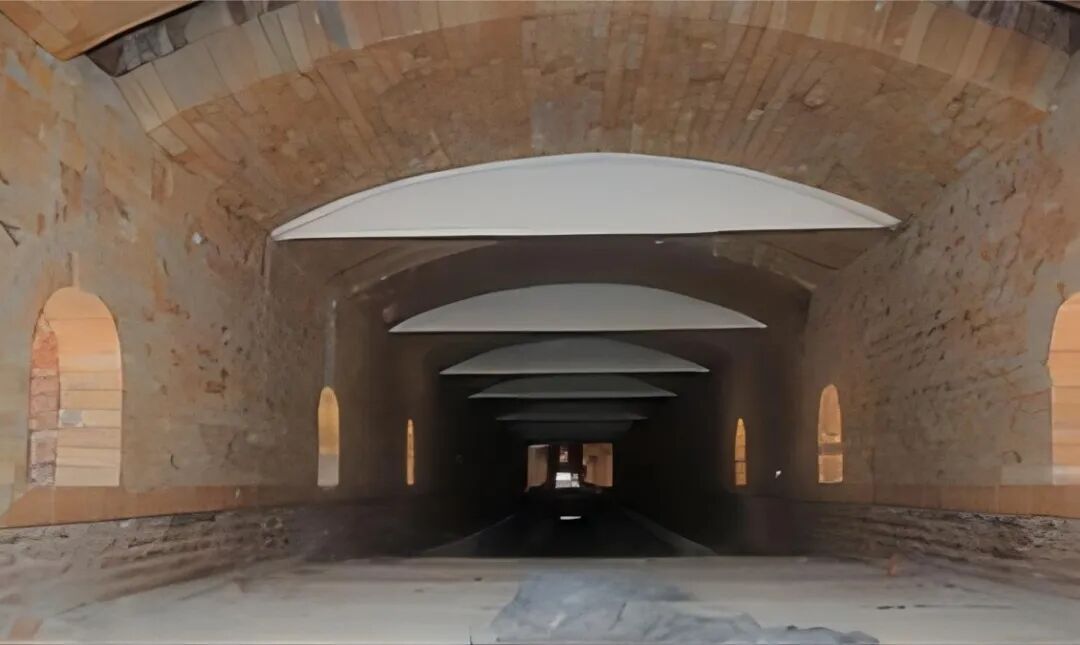
The main advantages of ceramic fiberboard are:
1. In the preheating zone, it can be used to form a sealing gas curtain, effectively isolating the external environment and reducing heat loss.
2. Inside the drying zone, it helps reduce the stratification of hot airflow, promotes uniform temperature distribution, and prevents products from cracking due to excessive temperature differences.
3. In the firing zone, ceramic fiberboard can regulate the kiln pressure and increase the turbulence of hot flue gas, thereby reducing the temperature difference on the same cross-section.
4. In the cooling zone, by properly setting ceramic fiber baffles, temperature can be regulated to ensure product quality and avoid cracking caused by excessively rapid cooling.
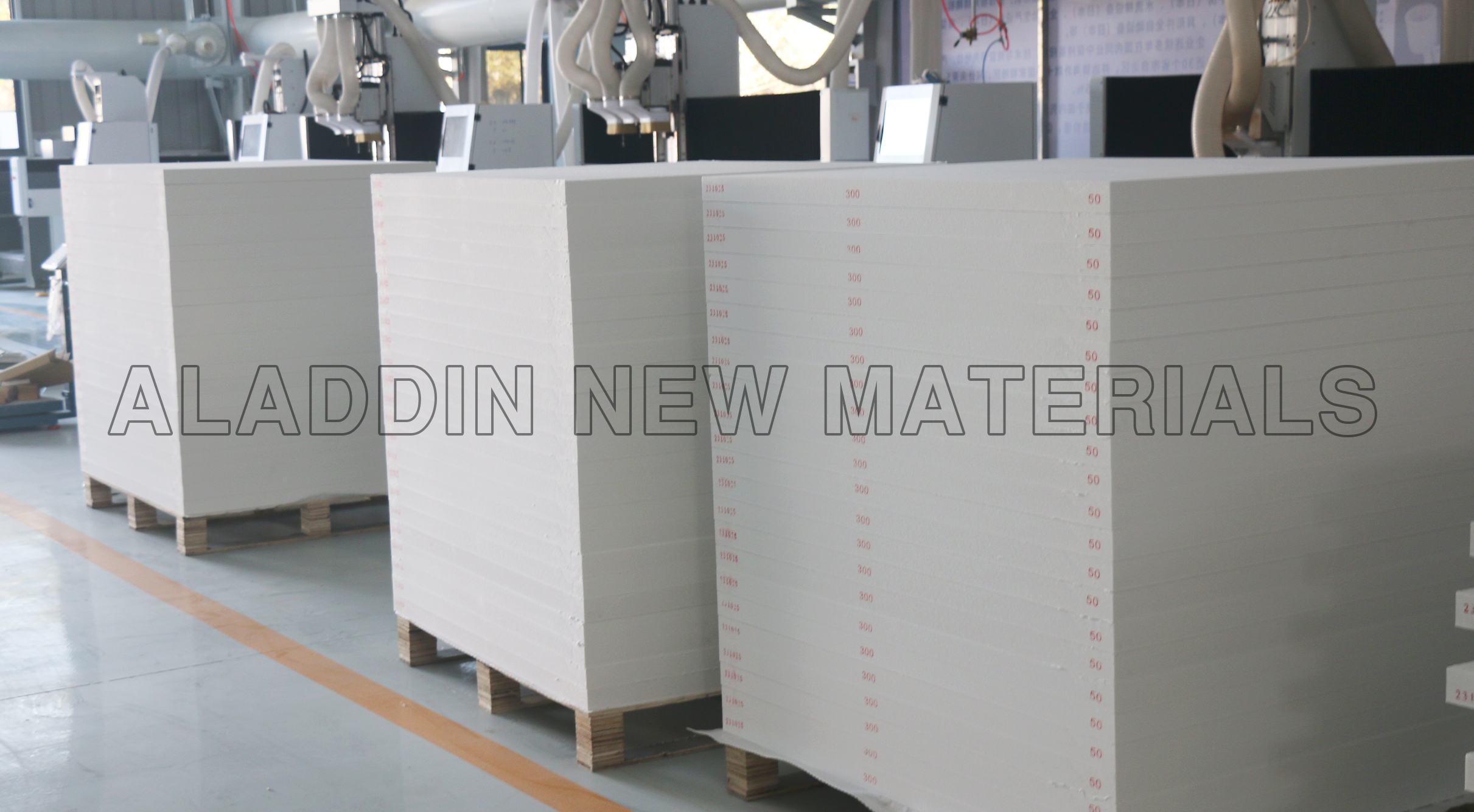
Applications:
The baffle structure is modularly designed for different zones to adapt to varying temperature requirements. The specific setup is as follows:
In the preheating zone, it is recommended to install 2 to 3 fire baffles;
At the boundary between the preheating zone and the low-temperature zone of the firing zone, install 1 fire baffle;
In the medium and high-temperature zones of the firing zone, install 1 to 2 fire baffles;
At the boundary between the high-temperature zone of the firing zone and the rapid cooling zone of the cooling zone, install 1 to 2 fire baffles;
At the boundary between the rapid cooling zone and the slow cooling zone of the cooling zone, install 1 to 2 fire baffles;
In the slow cooling zone of the cooling zone, it is recommended to install 3 to 5 fire baffles. For special products, adjustments should be made according to specific circumstances.
LiveChatX
 Send Email
 WhatsApp