
Ceramic Fibers for Vitrified Microsphere Expansion Furnaces
To select insulation materials for industrial kilns, it's essential to first understand the kiln's overall characteristics, such as its long-term operating temperature, operating system, application industry, field, working atmosphere, and processing medium. Today, Aladdin will guide you through analyzing which ceramic fiber products are most suitable for insulation in various situations involving vitrified microsphere expansion furnaces!
PART.01
Introduction to Vitrified Microsphere Expansion Furnaces
Vitrified microsphere expansion furnaces are high-temperature equipment used for producing perlite vitrified microspheres, typically vertical kilns. The combustion chamber is located at the bottom of the kiln body, in the convective heating zone where the material contacts the hot airflow. The movement of mineral particles within the furnace cavity is controlled by two main forces: gravity, which guides the mineral particles into free fall; and buoyancy, which acts in the opposite direction to gravity, slowing down the free fall. In the initial stage after the mineral particles enter the furnace cavity, the buoyancy from the rising airflow is less than their own weight, causing them to move downwards. When the perlite particles are heated above 850°C during their descent, they begin to expand, increasing in volume and buoyancy. When the buoyancy exceeds their own weight, the expanded perlite particles rise with the hot airflow and continue to expand under heat. After reaching the top of the kiln with the hot air, the expanded perlite particles are guided by an induced draft fan into a water-cooled horizontal separator and a cyclone separator, completing the product shaping and separation. The separated finished product is then transported by a blower to the finished product silo for packaging and discharge.
PART.02
Vitrified Microsphere Expansion Furnace Operating Conditions
A. Heat Source: Coal Gas/Natural Gas - Electricity
B. Firing Temperature: 1000℃
C. Wind Speed: Maximum 25m/s
PART.03
Ceramic Fiber for the Vitrified Microsphere Expansion Furnace
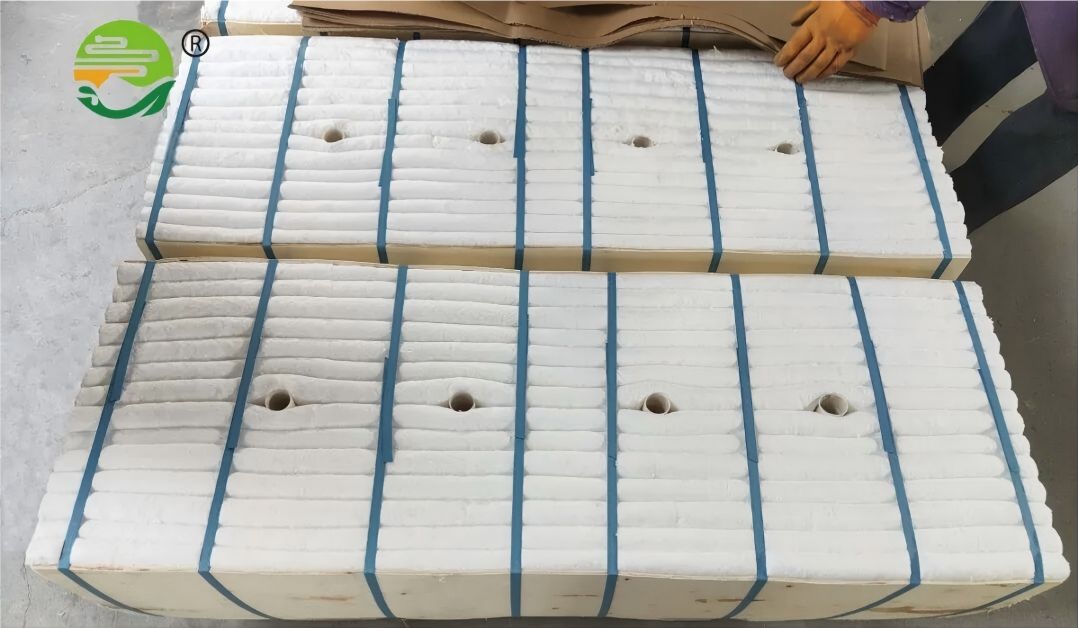
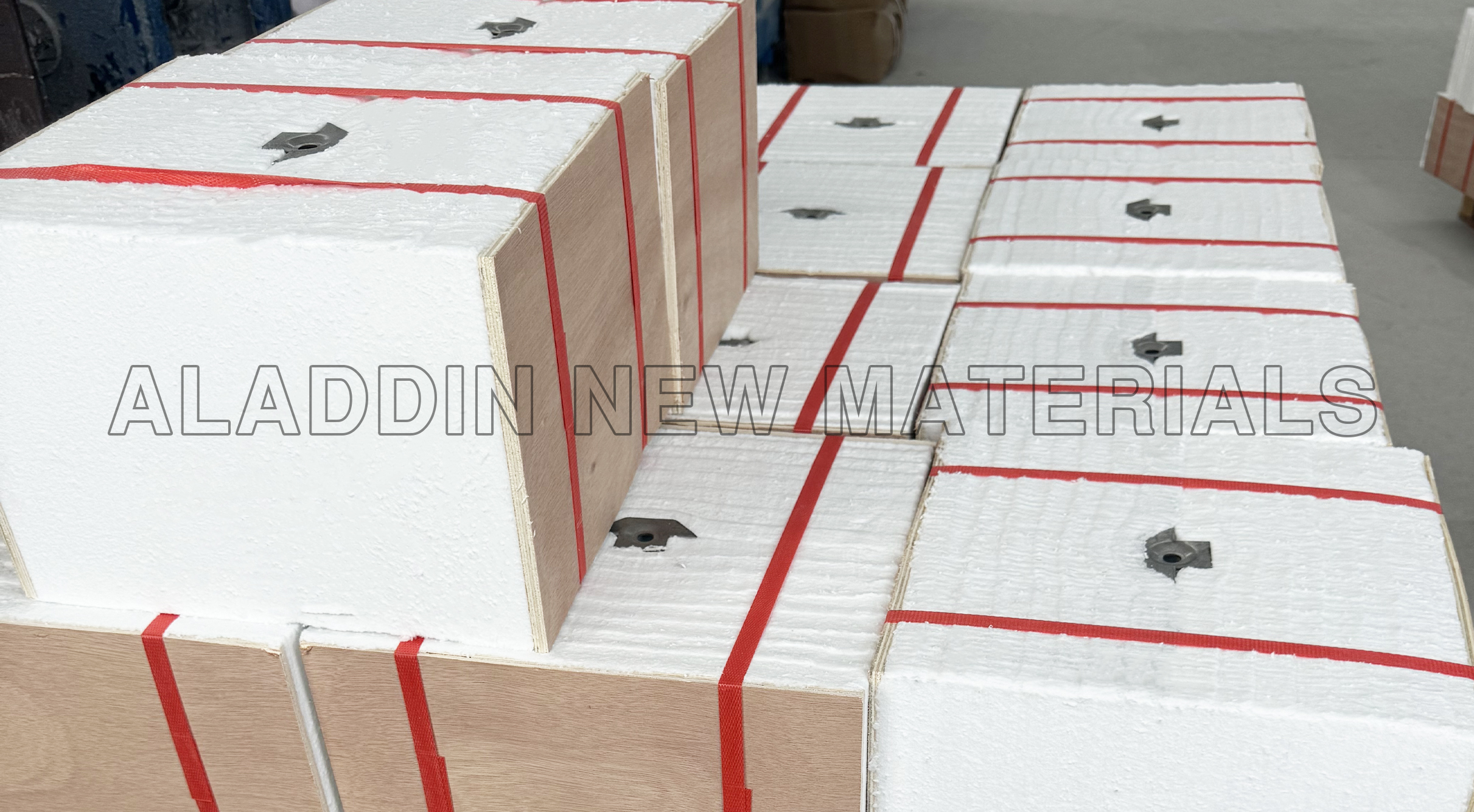
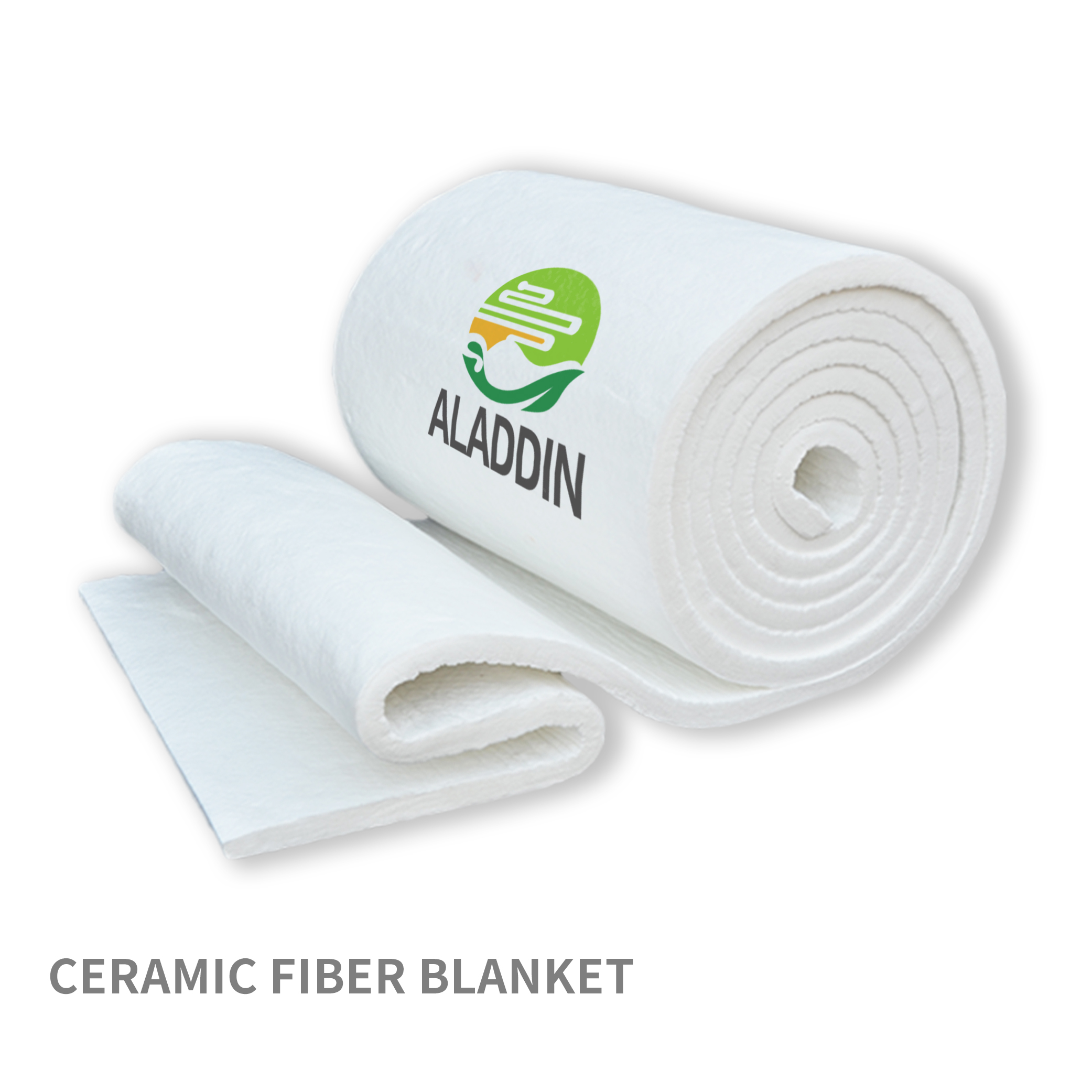
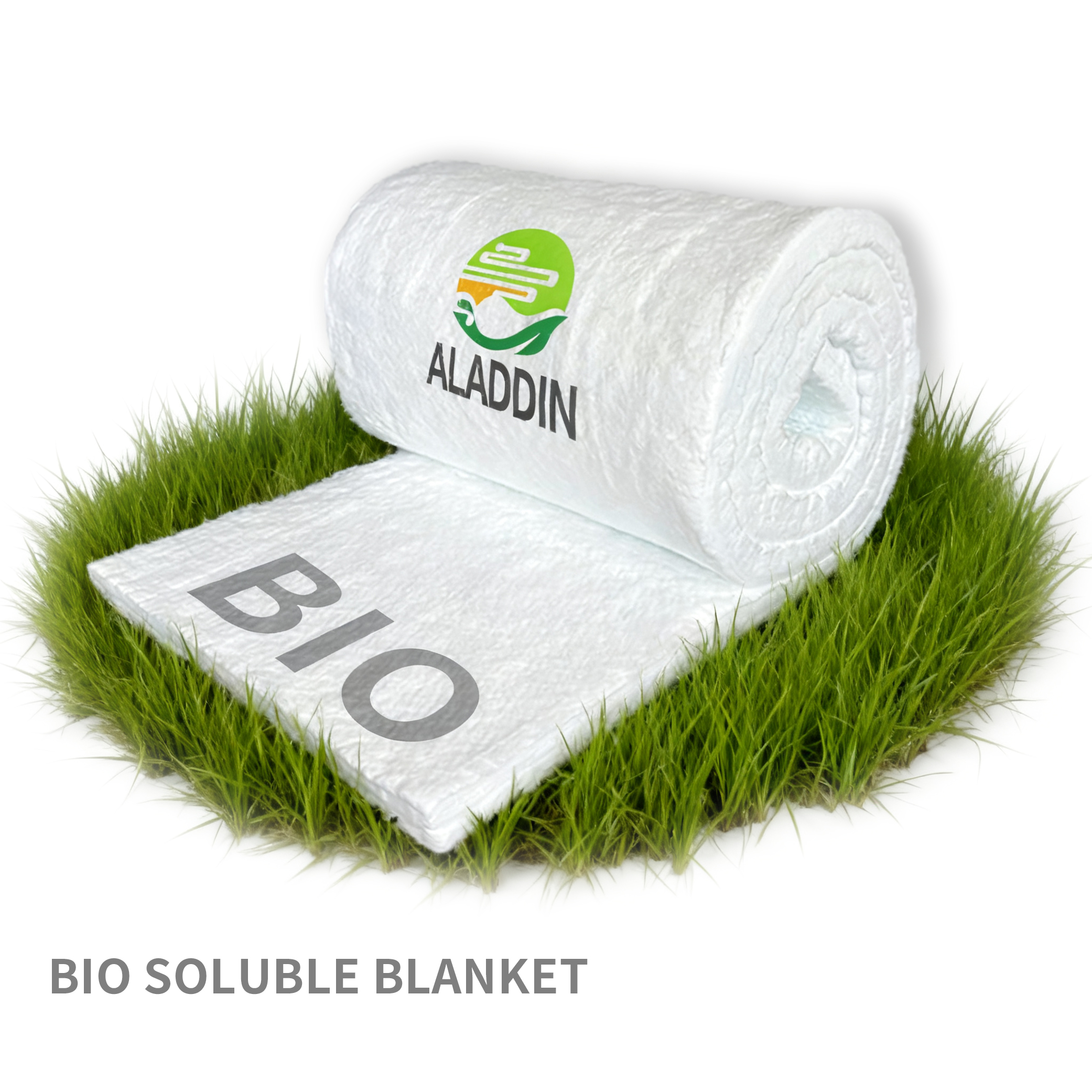
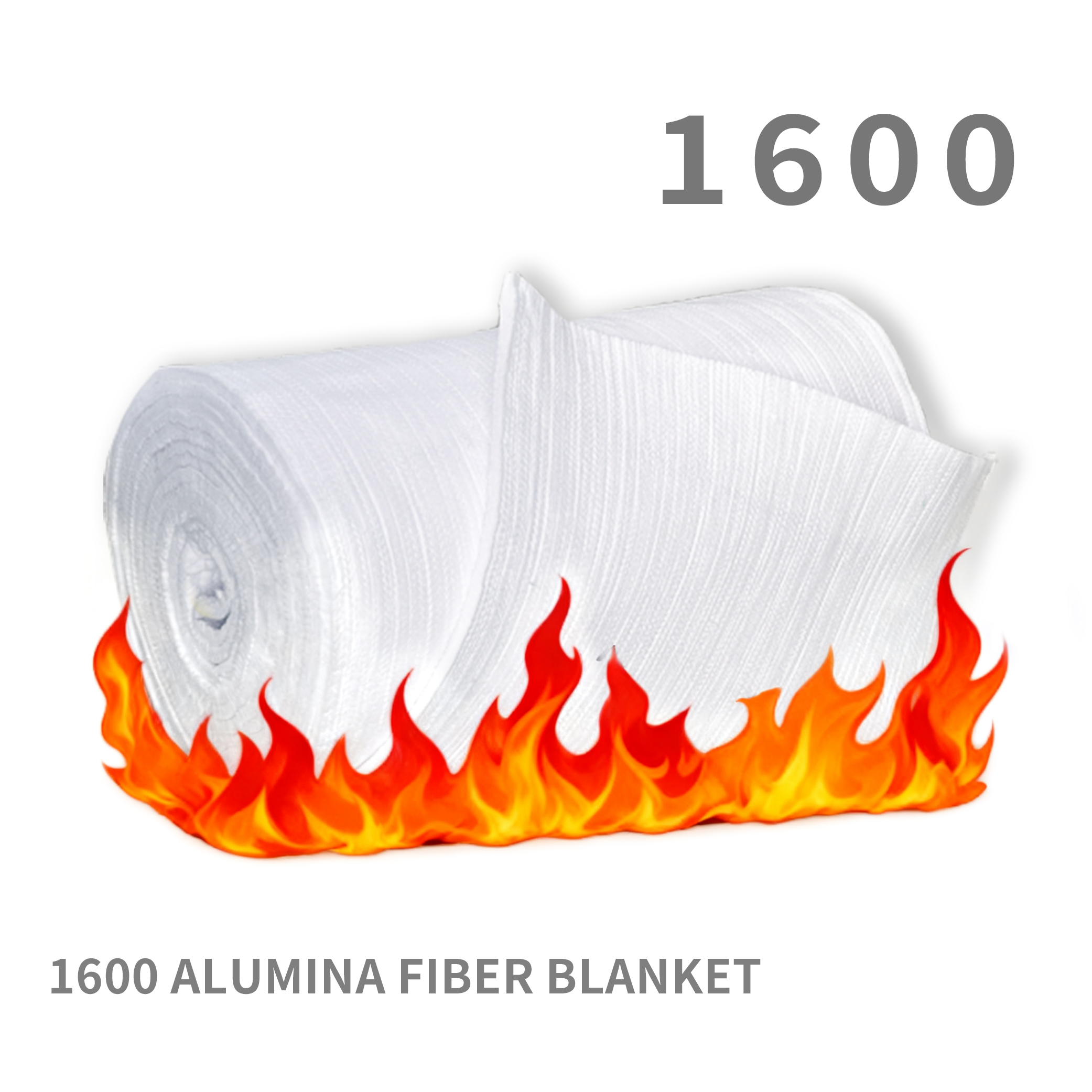
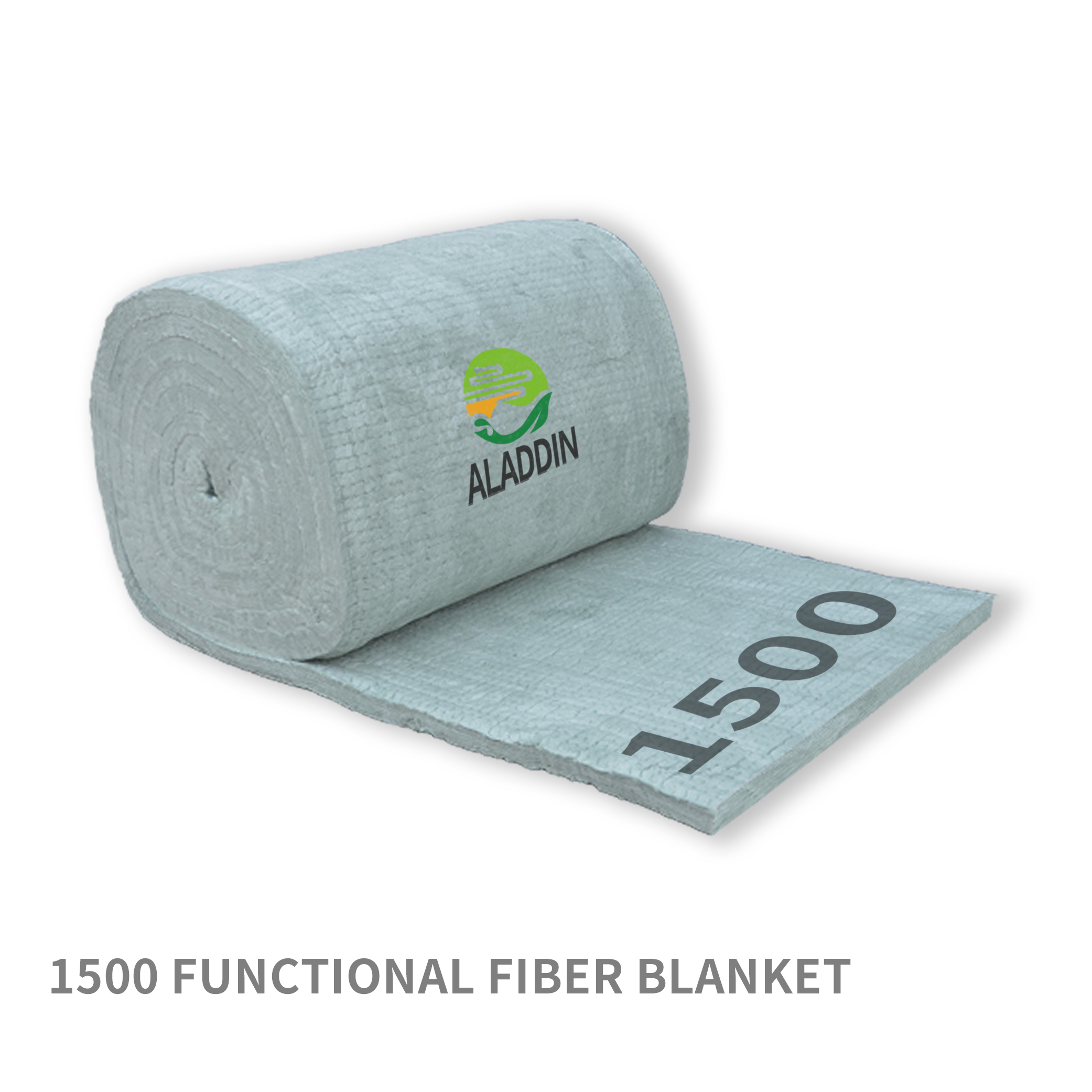
The upper and lower furnace openings adopt an Aladdin ceramic fiber module + Aladdin ceramic fiber blanket layered composite insulation structure. The middle vertical furnace cylinder uses ceramic fiber folded blocks, making construction more convenient and faster. The ceramic fiber modules and folded blocks are made of 1260 standard type, and the burner part is made of 1260 high-purity material.
PART.04
Advantages of using ceramic fiber modules
(1) After untying, the folded blankets will be squeezed together in different directions, without creating gaps.
(2) The elastic fiber blankets can resist mechanical external forces.
(3) The elasticity of the fiber blankets can compensate for the deformation of the furnace shell, so that there are no gaps between the modules.
(4) Due to its light weight, it absorbs very little heat when used as insulation material.
(5) Low thermal conductivity results in high energy-saving effect.
(6) It has the ability to resist any thermal shock.
(7) The lining does not require drying and curing, so it can be put into use immediately after installation.
(8) The anchoring system is away from the hot surface of the module, so that the metal anchors are at a relatively low temperature.
LiveChatX
 Send Email
 WhatsApp